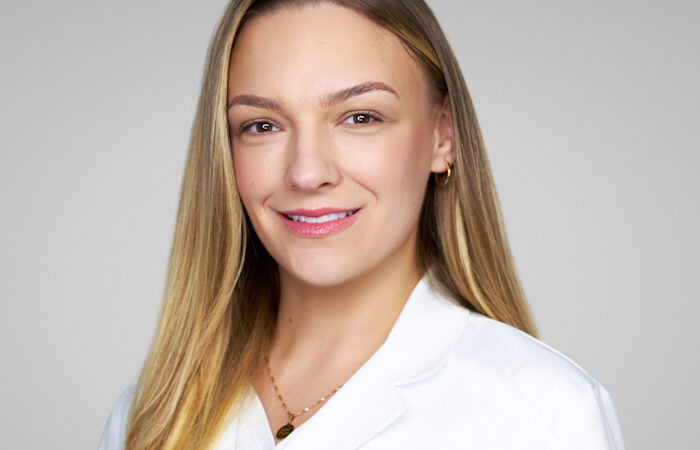

“No pain is felt, and no stitches or sutures are required,” commented Dr. Dimitar Stramski to Telegraph newspaper.
“We can be ranked among the leading ophthalmology clinics in Europe and worldwide.”
– Dr. Stramski, cataract is the most common cause of blindness. Fortunately, the disease is permanently treatable through surgery. Could you tell us more about the procedure—what it involves and whether it is fast and safe?
– Cataract, also known as “clouding of the eye lens,” is a common condition whose only effective treatment is the surgical removal of the opacified natural lens and its replacement with an implant—an intraocular lens. Since the introduction of ultrasound technology in cataract treatment, and more specifically the introduction of phacoemulsification by Charles Kelman in 1967, the procedure has been continuously improved, becoming faster and safer over time.
With this method, a small surgical incision is made through which the clouded natural lens is first removed, followed by the implantation of an artificial transparent lens. The type of intraocular lens is selected in advance, depending on the patient’s condition and visual needs. The procedure lasts only a few minutes, the patient feels no pain, no sutures or stitches are required, and visual improvement is often noticed within the following days.
– What is the patient’s journey for cataract surgery, and how long does recovery take?
– Every patient undergoing cataract surgery at VISION must first have a comprehensive examination by a specialist. This includes pupil dilation, calculation of the appropriate diopter power of the intraocular lens, assessment of corneal endothelial cell count, and examination of the peripheral areas of the retina.
All of these highly specialized tests are mandatory for every patient scheduled for cataract surgery and are essential for the smooth performance of the procedure and for achieving optimal postoperative results.
– Are there any innovations in ophthalmic surgery, particularly in cataract surgery?
– In ophthalmology, as in every other medical specialty, technology is advancing rapidly. New features are constantly being introduced in the surgical equipment and operating microscopes we use, making procedures increasingly precise and allowing us to detect pathological changes in the smallest detail—something that was impossible just a few years ago.
– Can the patient’s vision after surgery be predicted?
– It is extremely important to carry out a thorough preoperative examination with all necessary tests in order to predict postoperative visual outcomes. If we detect another eye condition such as glaucoma, macular degeneration, diabetic retinopathy, or others, we always explain in detail what visual results can be expected after surgery and what additional treatments may be required.
– You are a young specialist, yet you have already gained substantial experience in diagnosing and treating some of the most severe eye diseases. What is your approach?
– An individualized approach and good communication with the patient are very important to me. Before the examination, I take a detailed medical history to understand all accompanying diseases, previous surgeries, and current therapies. Sometimes even a seemingly minor detail can be crucial for making the correct diagnosis. In rarer conditions, we always discuss the case with colleagues and decide together which additional tests should be performed.
– Where do you believe VISION stands on the global map of ophthalmology centers?
– We strive to measure ourselves against the world’s leading centers, and I can confidently say that at VISION Clinic we are equipped with the most advanced diagnostic and treatment technologies for a wide range of eye diseases. This gives us the confidence to claim that the clinic can be ranked among the leading institutions worldwide, both in terms of equipment and the specialists working here.